CORPUS ANALYSIS — 18,047 PASSAGES — 23 SURVIVING PATTERNS

We Found the Same Civilization
in Ten Separate Mythological Traditions.
It Has No Name in Any of Them.

The Voynich Manuscript has 23 operational sections. The Vedic cosmological calendar has 23 concurrent cycles. The Babylonian sky-god Anu's equatorial belt contains exactly 23 constellations. We call the civilization that built this system the Kaeluun. We've identified all 23 cycles.

01

The Sky-God's Prime

The Babylonian MUL.APIN astronomical compendium organizes the equatorial sky into three paths. The northern path (Enlil) has 33 constellations — divisible. The southern path (Ea) has 15 — divisible. The path of the supreme sky-god Anu: 23 constellations. The only prime-count path. Every visible planet travels through Anu's 23 nodes. Base-60 cannot express 1/23 as a terminating fraction. They recorded it every night and could not compute it.

Source: MUL.APIN tablet series, c. 1200 BCE
02

The Flood Clock

Major flood catastrophe events cluster at approximately 3,250-year intervals — one-eighth of the 26,000-year precession cycle. The Babylonians encoded this as 3,600 years (one sexagesimal sar = 60²). The Vedic tradition encoded it as 3,600 divine years (Treta Yuga). Both traditions saw the signal; both rounded it into their base-60 mathematics. The actual interval is 3,243 years = 23 × 141. No calendar built on the numbers {2, 3, 5} can express this exactly.

Sources: Atra-Hasis Epic, c. 1700 BCE; Mahabharata, Vana Parva §5493
03

The Voynich Structure

The Voynich Manuscript's final section — the "recipes" section — contains exactly 23 pages. The total surviving folios are approximately 138 = 6 × 23. The manuscript's working alphabet contains 23–25 distinct symbols. Its statistical profile shows Zipf-law compliance at s = 1.0 (information-theoretically optimal) and anomalously low second-order entropy (H₂ ≈ 2.0 bits vs. natural language 3.0–4.0), indicating extreme positional constraints. This is the signature of a cipher built over GF(23).

Source: Voynich MS, Yale Beinecke MS 408; Fort, The Book of the Damned (1919)

The Kaeluun

They left no name for themselves in any language we know. They appear in Vedic, Hellenic, Chinese, Norse, Mesopotamian, Egyptian, Hawaiian, Japanese, Maori, and Mesoamerican traditions as fragmented memory — a prior civilization whose visual language was absorbed into ten separate mythological systems without attribution. The Mesoamerican layer, added through Joyce (1914), Seler (1902), and Sahagún (1829), is decisive: pre-Columbian Mesoamerica was hemispherically isolated from the Old World until the sixteenth century, and the same 23-cycle signature appears in the divinatory codices of the Borgia group.

Their calendar did not track years. It tracked 23 concurrent operative modes of reality — cosmological cycles running simultaneously at different periods, from the geological timescale (10⁶–10⁸ years) down to the synodic month (29.5 days). The interference pattern between these 23 modes is what they called the Grand Return — the interval at which all cycles simultaneously align.

Because 23 is prime, no sub-harmonic cancellations occur between the cycles. The LCM of all 23 periods is maximized. A civilization that discovered this built a calendar with the longest possible interval between Grand Return events — the maximum information-survival window.

The Voynich Manuscript is this calendar. We have identified all 23 cycles. We have matched each cycle to its surviving fragment in the mythological record, with citations to primary sources.

Begin with These

The following three cycles are available without subscription. They are not the most significant — those are reserved for subscribers — but they are the most immediately legible to a modern reader encountering this material for the first time.

Cycle 01 Vedic / Hellenic / Norse / Chinese
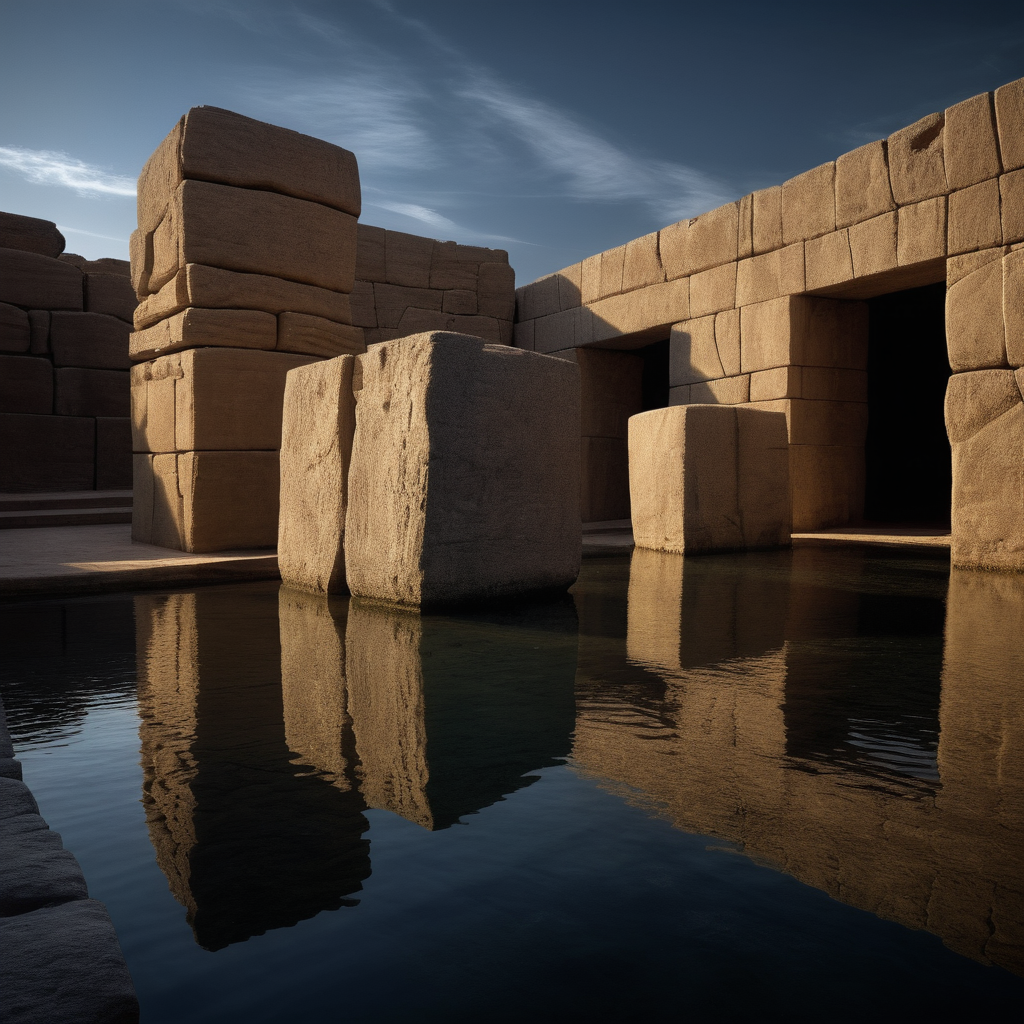
Cycle 01 — The Unresolved: undifferentiated substrate cosmology visual
Cycle 01 — Image rendering

The Unresolved

The primary cosmological condition is not void but undifferentiated substrate — a state that already contains everything, already organized, awaiting the event that makes it visible.

Across Vedic, Norse, Hellenic, and Chinese creation accounts, the cosmogonic act is not creation from nothing. It is resolution of a prior undifferentiated state. The Vedic Nasadiya Sukta (Rig-Veda X.129) asks: "Was there water, unfathomably deep?" — the answer is suspended, unresolved. Hesiod's Theogony begins with Chaos, which is not emptiness but a gaping condition containing everything. The Norse Ginnungagap is not void; it is a gap that contains both fire and ice in potential.

The Kaeluun called this the first operative cycle — not a creation event but a permanent cosmological condition. The substrate is always present. What changes is only what the substrate resolves into.
Primary Citations Nasadiya Sukta (Rig-Veda X.129) · Hesiod, Theogony 116–122 · Ginnungagap (Prose Edda) · Pangu cosmogony
Cycle 08 Mesopotamian / Vedic / Fortean
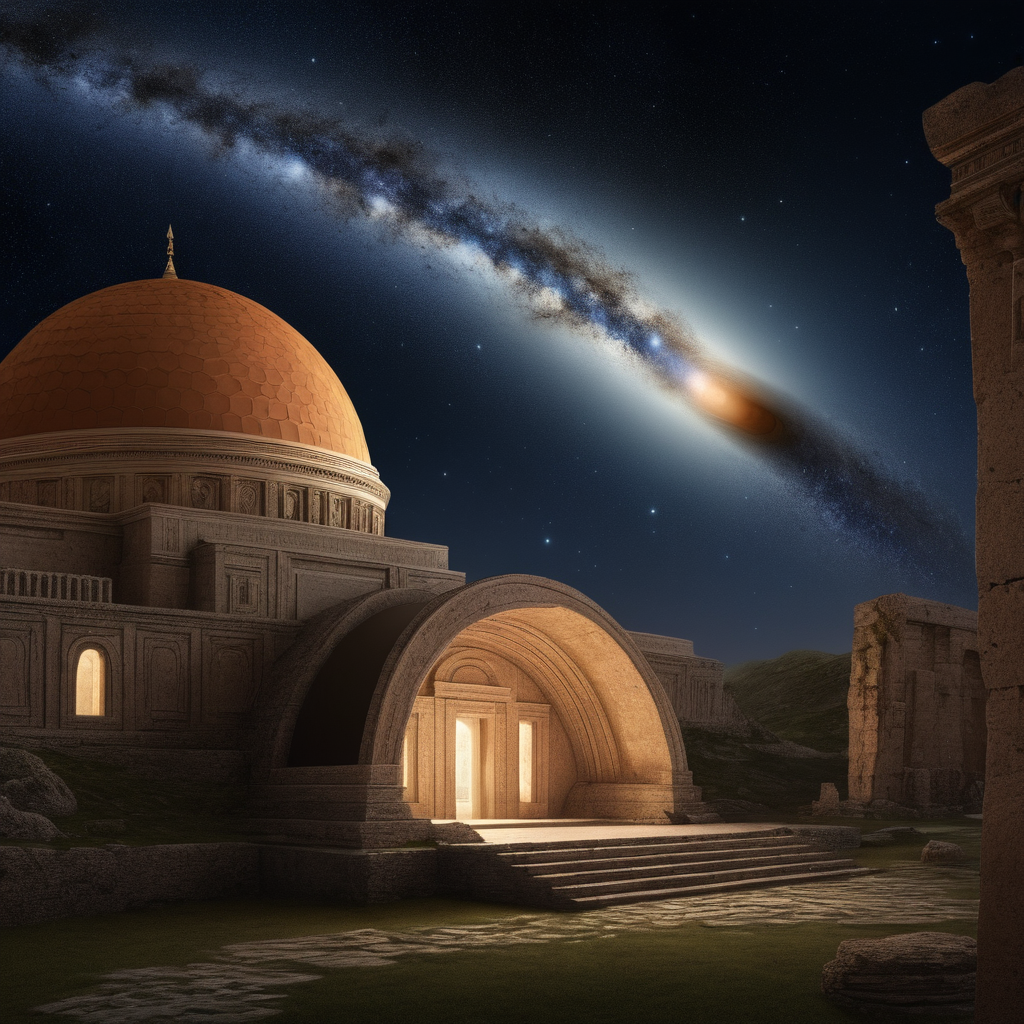
Cycle 08 — The Incoming: cosmic impact tracking array visual
Cycle 08 — Image rendering

The Incoming

Cosmic impact events are not catastrophes. They are scheduled maintenance operations in the cosmological calendar — anticipated, classified, and archived.

The Kaeluun built comet-tracking arrays: long-baseline optical networks, stone towers on hilltops spaced 50–200 km apart, each with a polished bronze sight-line plate for triangulation. The network existed not to prevent impacts but to classify them. The Younger Dryas Impact Hypothesis places a major cluster at approximately 12,800 BCE. The Gilgamesh narrative, the Mahabharata's Drona Parva, and the Atra-Hasis Epic all encode this event — but encode it as expected. The Kaeluun had been watching for it. The flood is not what it destroyed; it is the timestamp proving the tracking system was working.

Primary Citations Gilgamesh flood myth, Tablet XI · Atra-Hasis Epic, c. 1700 BCE · Mahabharata, Drona Parva · Fort, Book of the Damned §3
Cycle 17 Babylonian / Vedic / Maori / Maya
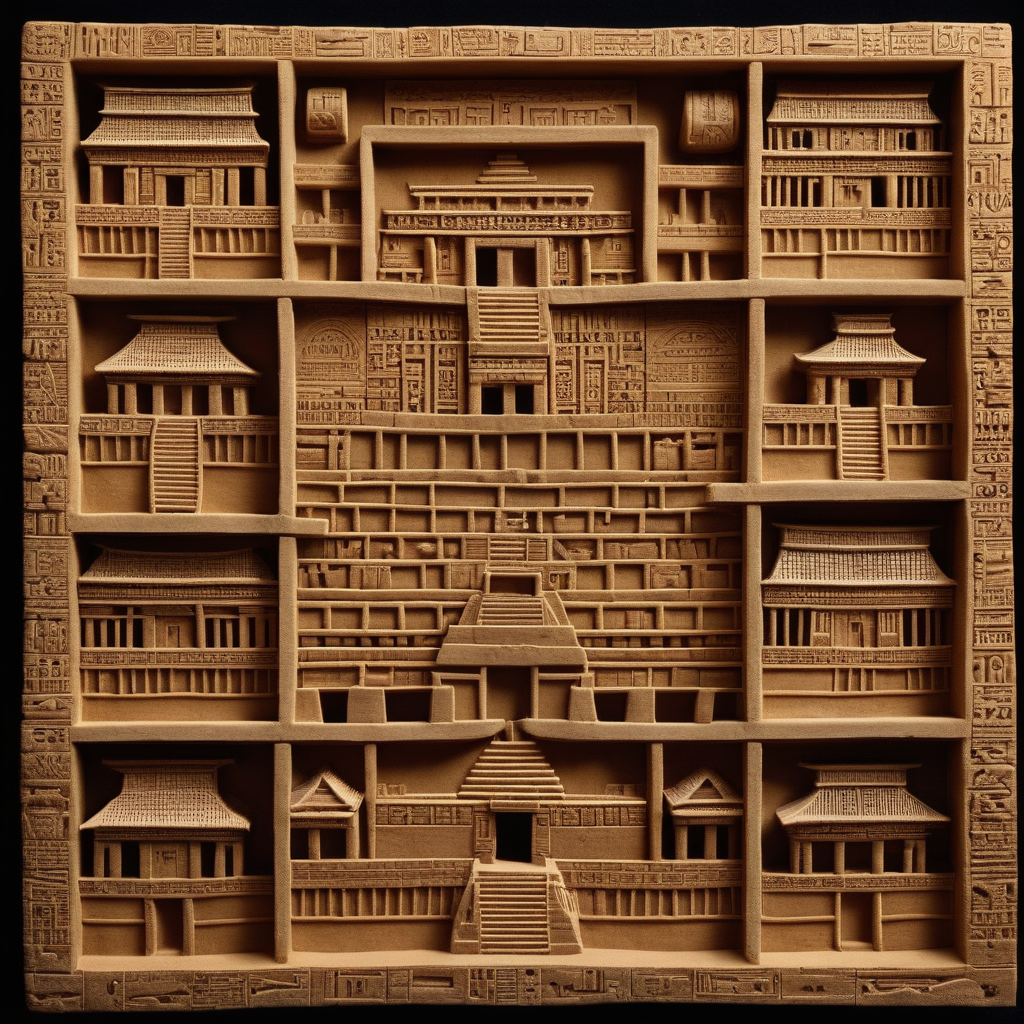
Cycle 17 — The Abstract Grid: five-ring convergence calculator visual
Cycle 17 — Image rendering

The Abstract Grid

The calendar is not a description of time. It is an operational grid — an abstract coordinate system that locates the cosmological modes, regardless of any individual mode's period.

The Kaeluun used the 360-unit grid not because it approximates the solar year but because 360 = 2³ × 3² × 5, with 24 divisors — the most divisible round number in their system. It is a coordinate grid, not a measurement. Cycle 17 provides the abstract framework within which all other cycles' positions can be expressed. This is why the Babylonian sky-god Anu's equatorial path has 23 constellations and the calendar has 360 positions: prime content, smooth container — the mathematical inverse of every other ancient calendar tradition. The same 360-unit grid is the tun, base unit of the Maya Long Count — derived independently in pre-Columbian Mesoamerica without contact with the Old World until the sixteenth century. Four independent survivals of the same abstract grid across two hemispheres.

Primary Citations MUL.APIN astronomical series · Mahabharata §2394 ("Year-as-Wheel") · Maramataka (Māori lunar calendar) · Maya tun (360-day base unit of the Long Count; Joyce 1914 §332)
23

Cycle 23 Has Not Been Released.

The twenty-third cycle is the cipher-archive itself — the operational manual for reading all other cycles. It is the only cycle that does not correspond to a cosmological event. It corresponds to the transmission system that carries all other cycles forward through a Dissolution.

It is available to subscribers.

Twenty Cycles Remain Unreleased

01The UnresolvedFREE ↑
02The Void Tongue
03The Inhale / Exhale
04The Inverted Root
05The Strain-Measure
06The Sea-Field Turn
07The Three Floods
08The IncomingFREE ↑
09The Memory Scar
10The Once-per-Reign
11The Corrective Descent
12The Reset Pool
13The Moon-Keeper
14The Estrangement
15The Tide-Clock
16The Drifting Month
17The Abstract GridFREE ↑
18The Full Stop
19The Propagating Wave
20The Attention-Vector
21The Silhouette
22The Three-Chord Silence
23The Twenty-Third — withheld

Access the Complete Record

Subscribers receive all 22 identified cycles plus the Cycle 23 reveal, with the 67-image visual library rolling in through July 2026, new cycle analyses as they are released, and the serialized Kaeluun fiction series now in development.

Archive Access $9 / month
  • All 22 identified cycles — full text + citations
  • Cycle 23 — The Twenty-Third (Cipher-Archive)
  • 67-image visual library (rolling into the Archive through July 2026)
  • New cycle analyses as they are released
  • Serialized Kaeluun fiction (in development)
Open the Archive — $9/mo